


Why Language Localization Is Essential for SEO in Italy
 Posted by
Someone once laughed at an English-only website in Italy without translating a single page. The reasoning sounded confident enough—everyone understands English anyway. The reality is, it doesn’t work that way. Traffic stayed low, engagement barely moved, and sales were almost nonexistent.
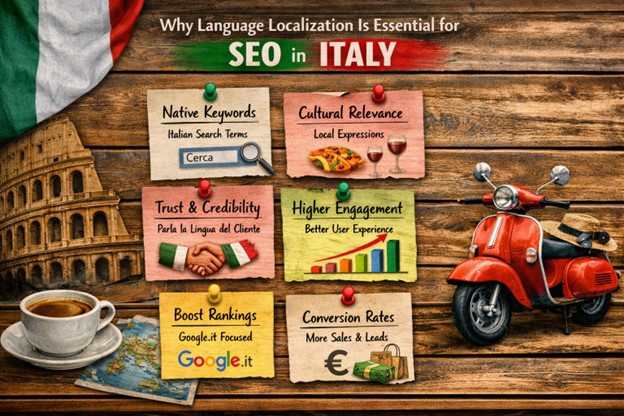
A few months later, the site was rebuilt with proper localization and suddenly the numbers began to shift. Search visibility improved, visitors stayed longer, and leads started appearing. Stories like this circulate in marketing circles because they highlight something simple that many brands still overlook—language matters. That’s why many international companies eventually turn to Italian SEO services.
Italians Search in Their Own Way
One common misunderstanding is assuming Italians search in Italian only because they have no alternative. In reality, they search that way because it feels natural. Someone looking for marketing services in Milan or Rome will most likely type their query in Italian. The same applies to product searches, local services, or everyday questions. It’s simply how people browse the web in daily life.
Now imagine a company trying to rank in Italy using only English keywords. Search engines struggle to connect those pages with what Italian users are actually typing. Even strong content may sit unnoticed while local competitors move ahead.. They realize that effective SEO requires understanding how people in Italy actually search.
Translation is Only Part of the Process.
Localization involves much more than replacing English words with Italian ones. Direct translation often sounds rigid or overly formal. This is similar to what you would expect from automated translation tools. Native readers notice that immediately.
A properly localized page reads naturally. Sentences flow smoothly, idioms feel familiar, and the tone aligns with how Italians communicate in professional contexts: expressive yet refined.
Keywords change as well. A phrase that performs well in English may not correspond to the words Italians usually use in search queries. In some cases, the closest translation isn’t even the term people type into Google. This is where experienced Italian SEO services become valuable. They analyze search data, cultural phrasing, and real user behavior before shaping content strategies.
Culture Influences Search Behavior
Italy has strong regional identities, and subtle language differences can appear from one region to another. Expressions that sound natural in Florence might feel slightly different in Naples or Turin. Small linguistic choices often depend on context, audience, and industry.
Consider an online store selling fashion accessories; Italians place significant value on style. Presentation and brand image. The language used on the website needs to reflect that sense of taste. Otherwise, the brand may appear inauthentic, almost like a poor imitation.
Search engines quietly observe user behavior signals such as bounce rates, time on page, and engagement. If visitors feel disconnected from the language or tone, they leave quickly, and rankings suffer. Effective localization helps prevent that.
Google Recognizes Local Intent
Search engines today do far more than match keywords. They analyze the intent behind a user’s search. When someone searches in Italian, Google typically prioritizes Italian-language content. Pages written specifically for Italian audiences have a stronger chance of appearing on the first page of results. English pages might occasionally appear, but they rarely dominate.
This is another reason businesses invest in Italian SEO services. Specialists optimize technical elements as well, such as metadata, structured data, and geographic targeting—so search engines clearly understand that the site is intended for Italian users. Without that structure, even well-written content can struggle to gain visibility.
Final Thoughts
Search behavior, communication style, and cultural expectations all influence how websites perform. Proper localization brings those elements together so content genuinely connects with users. That’s why Italian SEO services have become a common part of international marketing strategies.