

Ad Hijacking: The Hidden Threat to Your Paid Ad Campaigns
 Posted by
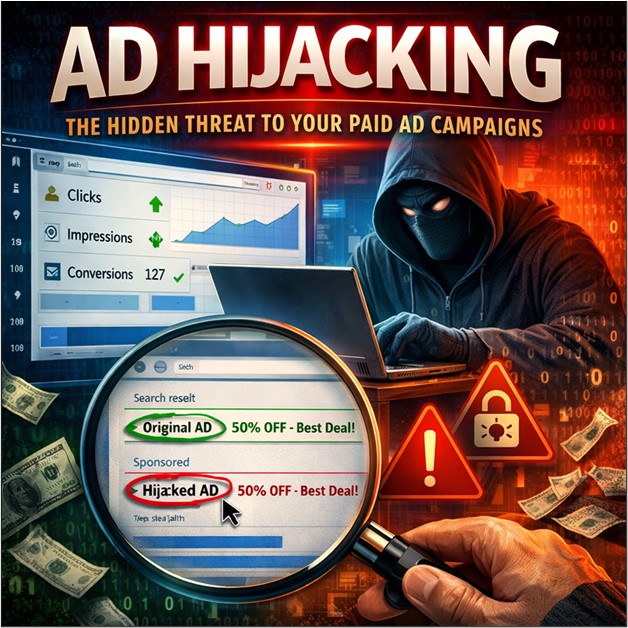
Everything looks fine in the dashboard—click-through rates are solid, impressions are healthy, and conversions are okay. But still something feels off. This quiet suspicion might be a result of ad hijacking.
What is ad hijacking, exactly?
Ad hijacking happens when someone copies your paid ads, sometimes word for word and runs them as their own. They bid on your branded keywords. They mimic your headlines. They make it look like your ad. But it’s not.
Instead of going straight to your landing page, users get routed through a third party. Sometimes that third party redirects back to you using an affiliate link. Sometimes they send traffic somewhere else entirely. Either way, someone else profits from your brand equity.
Here’s the frustrating part—at a glance, your metrics may not scream “problem.” They just slowly get messier.
Who is behind it?
Most often it is affiliates. Not all of them, but a chunk of ad hijacking comes from affiliate partners who decide to bid on branded terms they’re not supposed to touch. They replicate your creative, capture high-intent clicks, and collect commission on traffic that would have come to you anyway.
Competitors do it too.
Sometimes intentionally.
Sometimes via dynamic keyword insertion that accidentally pulls your brand into their ad copy. Motives aren’t complicated. It’s easy money until someone notices.
Why It’s So Hard to Catch
Ad hijacking thrives on subtlety. Hijackers geo-target their ads and rotate campaigns at odd hours. They use cloaking tactics so brand monitors see one thing while real users see another. Unless you’re searching from the exact right location at the exact right time, you might never see it.
Meanwhile, your branded keyword CPC starts creeping up. Impression share shifts. Conversion data looks slightly off.
What is the real damage?
- Higher CPCs: When unauthorized ads bid on your brand terms, auction prices climb. You pay more just to defend your own name.
- Stolen conversions: Affiliates reroute traffic through tracking links. They claim commissions for users who were already looking for you.
- Lead leakage: Hijacked ads sometimes send users to low-quality pages. These result in confusing experiences and off-brand messaging. Ultimately the users don’t blame the hijacker, but they blame you.
- Data Pollution: This one hurts long-term. Attribution models get distorted. ROAS looks different than reality. Optimization decisions get made on flawed inputs. Over time, that compounds.
How to Spot It
Start simple. Search your branded keywords manually. Look closely at ad copy. Check display URLs. If something feels slightly off, dig deeper.
Use tools like Google’s Ad Preview tool. Browse Meta’s Ad Library. VPN into different regions to see geo-targeted ads. Watch your metrics, too. Sudden spikes in affiliate conversions. Branded CPC inflation without strategic changes. Unexpected drops in impression share.
Those patterns matter.
If affiliate traffic grows fast without explanation?
That’s worth investigating.
How to Stop It and Keep It Stopped?
First, tighten affiliate agreements. Make branded keyword restrictions explicit. Spell out consequences.
Second, implement monitoring tools. Platforms like BrandVerity or Adthena scan SERPs across geographies and time zones. Manual checks won’t scale.
Third, build a response process.
When hijacking appears, who handles it?
Who collects screenshots?
Who files trademark complaints?
Platform protections help too. Google supports trademark enforcement. Meta has brand protection tools. TikTok offers reporting channels. And if internal bandwidth is thin? Agency partners can add another layer of defense.
Dedicated monitoring.
Structured audits.
Faster escalation.
This isn’t just about traffic. It’s brand protection.
AI-generated ads, expanding affiliate networks, and automated campaign setups make replication easier. This means vigilance has to scale too. https://www.serp-consultancy.com/google-ads-search-campaign.html
Conclusion
Ad hijacking isn’t loud. It doesn’t crash campaigns overnight. It quietly chips away at efficiency. The brands that treat it as a strategic risk, not just a nuisance, are the ones that protect both performance and trust long-term.