


Green Gains: How Sustainability Stories Turn Eco-Hype into Hard Sales
 Posted by
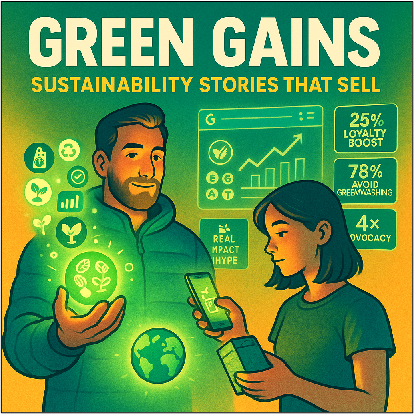
Eco-claims have a way of boosting loyalty by nearly 25%, which is impressive considering most consumers scroll past ads like they are allergic. Brands that crack the code of sustainability storytelling don’t just talk green but turn it into revenue. Picture a coffee brand posting a quick Reel showing beans traveling from farm to cup, sprinkled with carbon footprint stats and a two-second cameo from the farmer who grew them. Views spike, shares jump, and suddenly their clickout page looks busier than usual. Not because they guilt-tripped people, but because the story felt real.
As 2025 rolls along, Gen Z—now commanding close to 40% of global consumer power—demands transparency with an intensity that keeps marketing teams awake at night. With 78% ready to abandon brands caught greenwashing, it’s obvious why green storytelling isn’t a luxury. It’s the secret ingredient helping brands like Patagonia rank stronger, convert faster, and stay ahead while search engines reward real impact with prime SERP real estate.
Why Sustainability Storytelling Cuts Through the Noise
Traditional marketing once relied on vague “eco-friendly” labels slapped onto packaging. That era is basically over. Consumers now fact-check brands faster, armed with apps like Good On You or a quick Ecosia search.
What works today is narrative depth—stories with a pulse. Patagonia set the benchmark when its “Don’t Buy This Jacket” campaign resurfaced in 2025 SERPs. It didn’t brag about recycled materials. It highlighted the human cost of fast fashion. It may be counterintuitive but still effective. Sales climbed nearly 30% during a time when many brands were scrambling to redirect negative sentiment.
Patagonia didn’t stop there. Carbon calculators on product pages turned data into conversation. According to SEMrush’s 2025 reports, this bumped dwell time by 22% and nudged organic traffic upward. Google’s emphasis on E-E-A-T makes verifiable sustainability claims stronger ranking signals. That means your sustainability story shouldn’t live in a lonely blog post—it should sit across your site like a thread your entire brand identity hangs from.
Building Stories That Sell Without Sounding Like a Lecture
Brands often chase flashy stunts when they should be chasing honesty. Your North Star is simple—authenticity over theatrics. Start with a supply chain audit. A real one. Tools like the Carbon Trust calculator help translate vague promises into specifics such as, “This tee offsets 5 kg of CO₂ per wear.”
Numbers matter, but so doe’s narrative. Wrap those stats in human stories. A short Instagram docu-series following a weaver in Rajasthan who works with organic dyes does more for trust than a million sustainability badges.
Gen Z loves realness. Deloitte’s 2025 report notes that 65% prefer brands showing their missteps alongside their wins. This openness builds loyalty, which McKinsey’s data ties to a 25% rise in repeat purchases.
A story that admits imperfections? That’s gold.
Turning Sustainable Stories into Omnichannel Fuel
Your green story shouldn’t be confined to one platform. Think omnichannel minus the jargon fatigue.
- Email drips like “Our solar farm hit 80% capacity—want to see what’s next?” spark curiosity.
- TikToks with AR filters offering small “green audits” of products make sustainability surprisingly fun.
- For B2B brands, LinkedIn carousels breaking down ESG progress can sway enterprise buyers. Just ask Unilever as its 2025 ESG-focused campaign sparked an 18% bump in qualified leads.
- For search, schema markup for “sustainable product” or “eco-certification” can land rich snippets, boosting click-throughs by 15%.
Voice search is another opportunity, with nearly half of 2025 queries projected to be conversational. Queries like “How does this brand cut waste?” reward brands with transparent, story-driven answers.
Avoiding the Pitfalls like Greenwashing, Budgets, and Cultural Relevance
Greenwashing scandals still pop up like weeds. One misstep and your credibility takes a nosedive.
Certifications from Fair Trade, B Corp, or verified carbon auditors give your claims teeth.
Small brands often worry about budget, but micro-influencers, those with under 10K followers, deliver a surprising punch. With nearly 6X ROI in niche communities, they’re ideal storytelling partners, especially in spaces like ethical beauty or sustainable fashion.
For Indian brands, aligning with Atmanirbhar Bharat brings cultural relevance without sounding forced. Stories of artisans using upcycled fabrics resonate deeply. These narratives saw engagement climb 28% in Tier-2 cities last year and sit comfortably within evolving DPDP privacy guidelines.
Tracking the Payoff—Sustainability Equals Sales
The numbers speak loudly. Forrester’s 2025 findings show sustainable brands enjoying 4X higher customer advocacy. Loyalty programs built around eco-efforts see lifetime value jump by 20%. IKEA’s buy-back system recycled over a million pieces last year, cutting churn while boosting trust.
Marketers tracking success use GA4’s sustainability analytics—now standard—to blend feel-good metrics like shares with business outcomes like LTV lift.
Patagonia did it again in 2025 with its “Worn Wear” relaunch, which topped eco-searches in the U.S. and delivered 12% YOY revenue growth. That’s narrative SEO in full force.
Final Thoughts
Sustainability storytelling isn’t about saving the planet by Thursday. It’s about securing profits by being honest, transparent, and a bit bold. As Gen Z steps into boardrooms and budgets, brands that ignore sustainability risk becoming digital fossils.